
Carpenter ants
Carpenter ant control in the GTA and Peel
Large black ants indoors during winter can indicate a nest inside the heated structure. It is worth having the activity inspected.
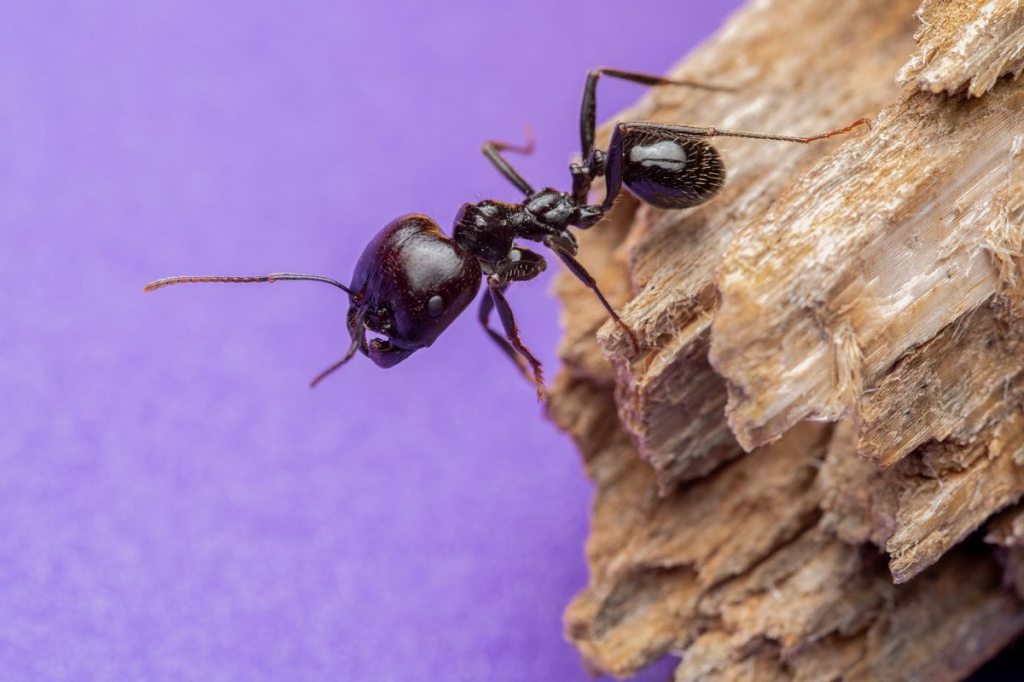
Why these matter more than other ants
Carpenter ants do not eat wood. They hollow it out to build galleries, and they go for wood that is already softened by moisture: a leaking window frame, badly flashed chimney, deck ledger, bathroom subfloor, or a roof leak above a soffit. Over time, a mature colony can damage structural wood. Because galleries are hidden inside the material, activity may go unnoticed until wood sounds hollow or feels soft.
It is slower than termite damage. But the moisture problem that brought them in is often the bigger issue anyway.
Signs
- Large black ants indoors in winter. Summer ants may be foraging from outdoors; winter activity is a strong reason to inspect for a nest in the heated structure.
- Coarse sawdust piles below baseboards, window sills, door frames or in the basement, often with bits of insect mixed in.
- A faint rustling in the walls on a quiet night.
- Winged ants indoors in spring, which means the colony is mature enough to reproduce.
- Wood that sounds hollow when you tap it, or feels soft near a known leak.
Parent nests and satellites
Carpenter ant colonies may include an outdoor parent nest and satellite nests inside a structure. Treating only the ants in view can leave the source active, so tracing activity and locating likely nests is central to the work.
How we treat them
- Look for moisture conditions. We check roof and flashing areas, gutters, window and door frames, deck attachments, plumbing, crawlspaces and basement humidity.
- Find the nest. Tapping and listening, tracing sawdust, following trails at dusk when they are most active, and checking the exterior perimeter and landscaping.
- Treat the void. Dust applied directly into wall voids and galleries, which the ants then spread through the nest.
- Non-repellent perimeter treatment, so it becomes a transfer zone rather than a wall they walk around.
- Tell you what to repair. We will name the specific moisture problem. Without fixing it, they come back.
Prevention
Fix roof, gutter and plumbing leaks quickly. Keep firewood off the ground and away from the house. Get rid of stumps and dead landscape timber near the foundation. Trim branches back off the roof and siding. Improve crawlspace and basement ventilation. Replace water-damaged wood instead of painting over it.
Is it carpenter ants or termites?
Carpenter ant galleries are generally smooth and clean and may leave coarse sawdust nearby. Termite damage often follows the grain and may contain soil. Send a photo and we can often help identify which signs you are seeing.
Find the nest and the moisture source early.
Free written quote. Ask about our guarantee on eligible services.

