
Mice and rats
Mice and rat control in the GTA and Peel
Removing active rodents is only half the job. Finding and closing the entry points is what helps prevent the next population from moving in.
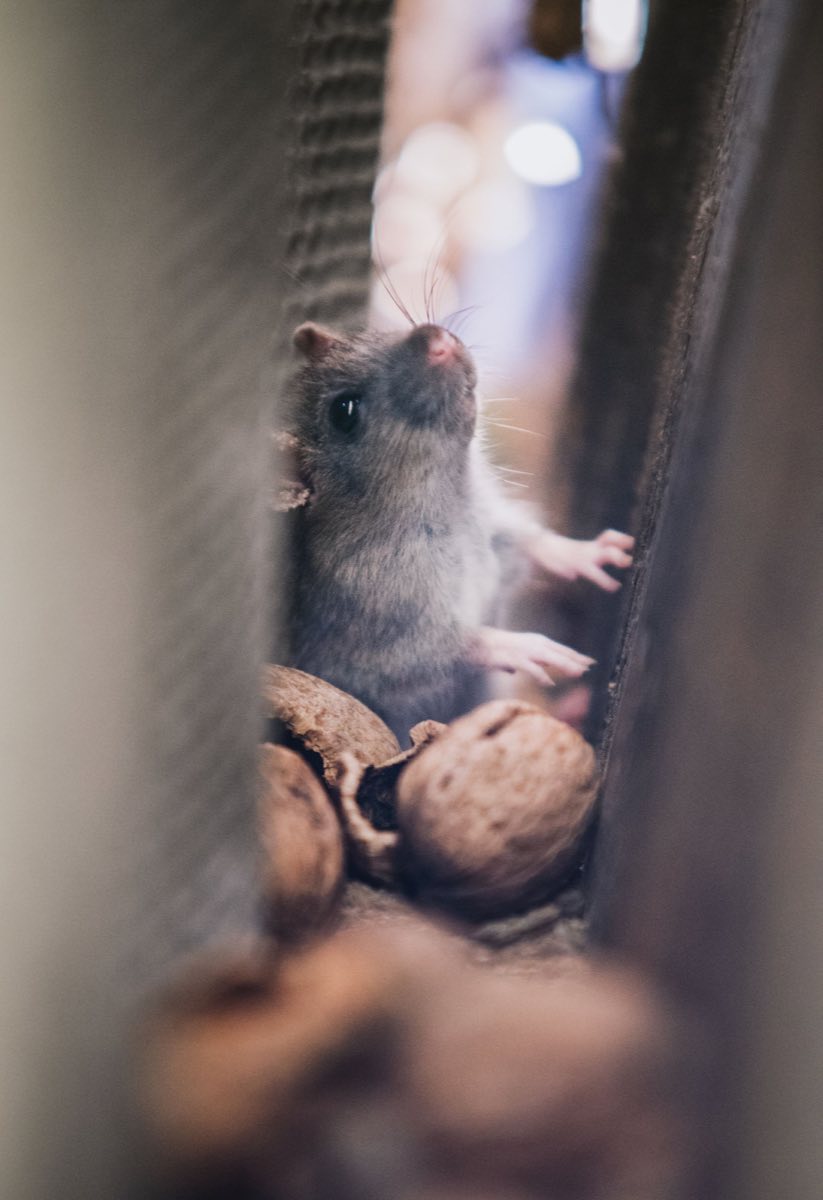
Signs of rodent activity
- Droppings. Mouse droppings are dark, pointed and about the size of a grain of rice. Rat droppings are two or three times bigger.
- Gnaw marks on food packaging, baseboards, wiring or plastic pipe.
- Scratching in the walls and ceiling, usually just after dark.
- Grease marks along baseboards and beams where they run the same route every night.
- Shredded nesting material in cupboards, behind appliances or in the attic, and a pet staring at one spot in a wall.
How they are getting in
A house mouse fits through a hole about the width of a dime, roughly 6mm. A rat needs something closer to a quarter. Common entry points in local homes include the gap under a worn garage door seal, the point where the gas line, AC line set, dryer vent or water service comes through the foundation, unscreened brick weep holes, gaps at soffit and roof returns, unscreened attic and bathroom vents, rotting basement window frames, and sump pump penetrations.
Older homes across Peel and the GTA can have settled foundations and worn seals. Newer builds can have unsealed utility penetrations and garage gaps. Both can get mice. The way in is just different.
Why traps alone may not solve it
Traps can reduce activity, but placement, monitoring and entry-point control determine whether the result lasts. If the route into the building remains open, new rodents can move in even after the current activity stops.
Our rodent program
- Inspection. We check inside and outside for runways, nesting areas, food sources and likely entry points, documenting the important findings.
- Control. We place traps along established runways and use tamper-resistant bait stations where the site and product label allow. Careful placement matters more than quantity.
- Exclusion. The scope may include durable mesh, hardware cloth, sheet-metal flashing, appropriate sealant, door sweeps, or screens for vents and weep holes.
- Clean-up guidance. Never sweep or dry-vacuum droppings, because it puts particles into the air. We walk you through doing it safely and can handle contaminated attic insulation.
- Monitoring and follow-up. Any applicable 90-day written guarantee is explained in your quote.
Why do I get mice every autumn?
Open entry points are a common reason activity returns. We identify the exclusion included in your quote so you know exactly what will be sealed and what may require a separate trade.
Straight answers
Rodent questions
How long does it take to get rid of mice?
Many homes see activity decline within the first week, but timing depends on the size and location of the population. We monitor the result and explain the expected service window in your quote.
Do you seal the holes, or do I need someone else?
Relevant entry-point sealing is included when listed in your written scope. If a repair needs a roofer, contractor or another trade, we will point that out before work begins.
Will something die in my walls and smell?
It is a risk with any rodent job. We manage it by placing traps to intercept them on their runways rather than driving them deep into wall voids, and by favouring traps over bait where odour would be a problem.
Is it safe with pets around?
We use tamper-resistant stations where appropriate and place devices to limit pet access. Tell us where your animals go, and follow the placement and access instructions we provide.
Remove them, then seal them out.
Free written quote, clearly scoped exclusion and guarantee terms explained in advance.

